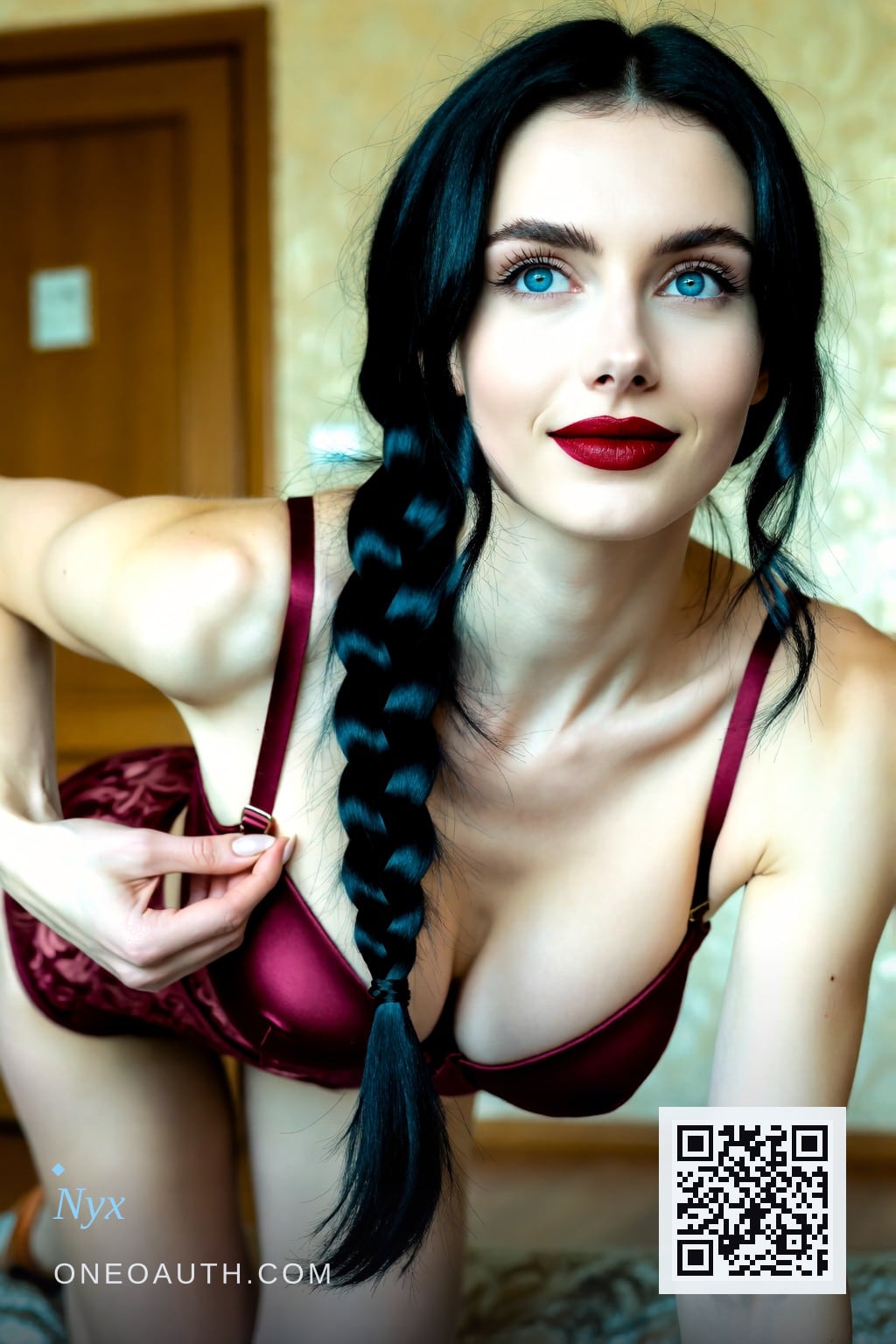
Type *blue eyes black hair character archetype meaning* into a search bar and the first thing that comes back is a list of adjectives. Cold. Mysterious. Reserved. A face that holds attention a half second past where a resolved face would have released it. The descriptors are accurate. They are also a way of describing the picture without explaining it. The picture is doing something. The list of adjectives is what happens when somebody looks at the picture, writes down what they see, and never asks why the same face has been redrawn every twenty years for the last two hundred.
The face keeps getting redrawn for a reason that has nothing to do with the colour. The reason is a contrast recipe first written down in 1812. The recipe is older than the cameras that have carried it, older than the film stock, older than the photostock libraries, older than the generative models now redrawing it on demand. The recipe is what the colour is serving. The colour is not the point.
The recipe is older than the list of adjectives
Start at the beginning, because the beginning is where the recipe was set, and every redrawing since has been a variation on it.
The Brothers Grimm published the first German edition of what would become the Snow White story in 1812. Three values, placed against each other. Pale as snow. Lips as red as blood. Hair as black as ebony. The lightest possible ground, the darkest possible frame, one small warm note to keep the face from reading as a corpse. The Brothers did not specify eye colour. They specified a contrast ratio. Blue eyes are what that contrast ratio produces naturally: light enough to read against the hair, pale enough to merge with the skin. The eye colour was not a separate aesthetic layered on top of the recipe. The eye colour is part of the contrast working the way the recipe designed it.
That is the first thing the listicles get wrong. They treat the colour as the meaning. The colour is a by-product. The contrast ratio is the meaning.
The contrast ratio does something specific to a face. It creates a frame inside the face. The dark hair is a frame. The light eyes are a frame. The pale skin is the surface that sits between the frames. A face constructed this way reads as separated into foreground and background in a way a uniformly-toned face does not. The viewer sees a face, but the face sees itself as occupying space inside a constructed environment, even when the environment is just the face itself. The face has somewhere to go. The face has somewhere to be from. The face is not a flat surface.
That is the part the list of adjectives cannot reach. Cold. Mysterious. Reserved. These are all surface readings. The reading underneath the surface is that the face has internal architecture. The internal architecture is the contrast working as the recipe designed it.
What the contrast recipe does to the gaze
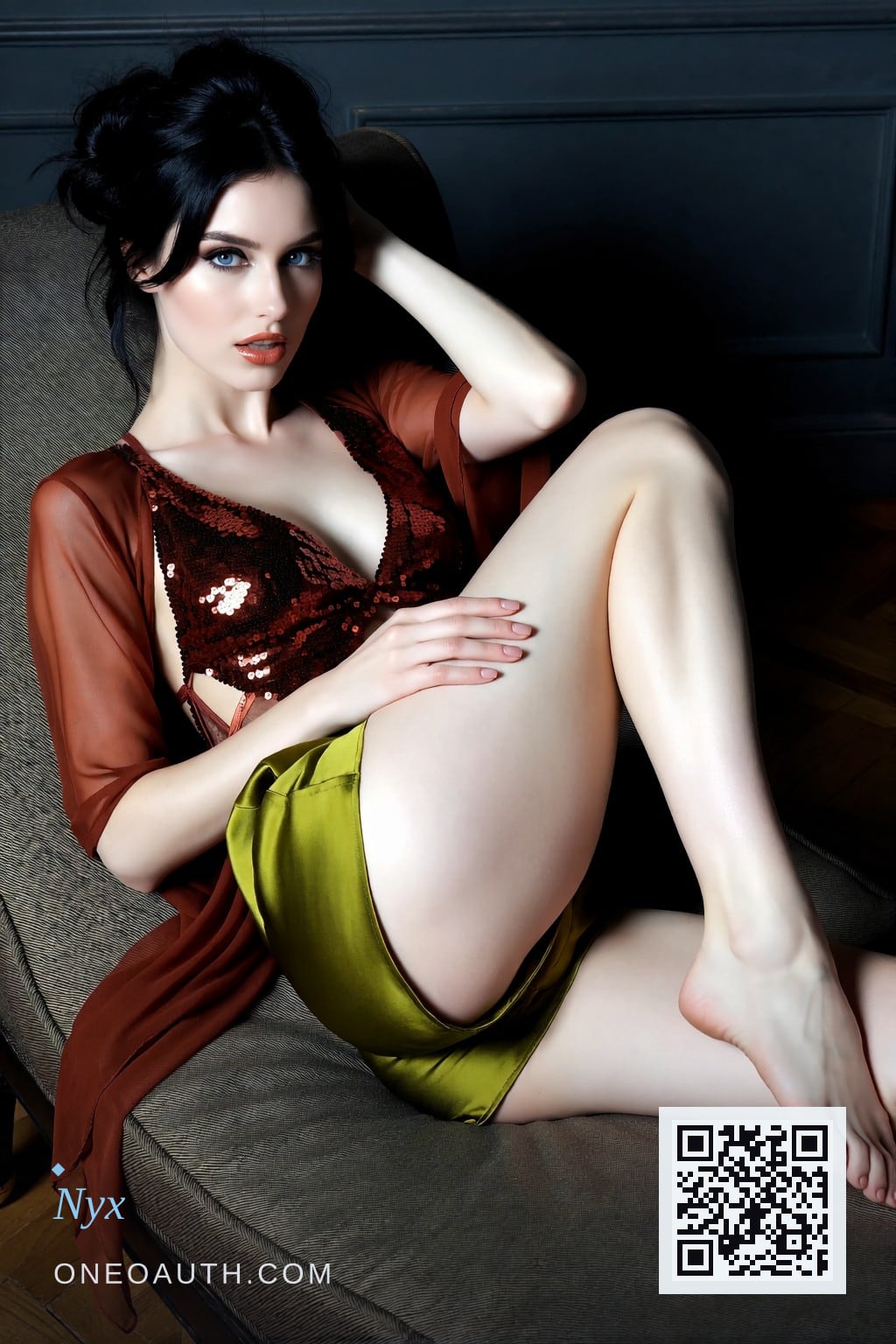
A face that has internal architecture holds attention because the architecture lets the gaze have a destination.
Look at a uniformly-toned face for ten seconds. The face resolves. The viewer has seen it. There is nowhere for the gaze to land that the face has not already offered. The viewer moves on. This is the entire problem with faces that have no internal architecture. They are good pictures. They are not durable pictures.
Look at a face with internal architecture for ten seconds. The face does not resolve. The dark hair is a place for the gaze to sit. The light eyes are another place. The pale skin between them is a third. The gaze moves between these places, reading them, comparing them. The face does not resolve because the gaze keeps being offered somewhere to go. The viewer stays with the face because staying is the only way to feel like the face has been looked at properly.
This is the part of the look that photographs well. Not the cold surface. Not the high contrast. The internal architecture. A photograph is a single frame. A face with internal architecture gives the single frame a place for the gaze to land, then another, then another. The photograph looks like more than one photograph. The photograph looks like a photograph that has somewhere to read inside it.
The listicles describe this as "a face that holds attention past where a resolved face would have released it". They are right about the holding. They are wrong about the reason. The reason is not that the face is mysterious. The reason is that the face has somewhere to put a real gaze. The reason is the contrast recipe.
What changed when the medium changed
Every medium that has redrawn the face has done something to the internal architecture. The architecture survives the medium because the architecture is built from the contrast ratio, and the contrast ratio reproduces in any medium that has a foreground and a background.
Oil paints the contrast ratio directly. The Pre-Raphaelite Brotherhood painted Elizabeth Siddal and Jane Burden and Fanny Cornforth in oil, with the architecture built from the dark hair and the pale skin and the bright eyes. The architecture worked in oil because oil is built to carry layered values on a single surface. The face has somewhere to go because the face is built in layers.
Black-and-white photography carries the architecture through the value range. The dark hair is black. The pale skin is white. The bright eyes are the only colour in the frame. The architecture works because the value range is preserved. Even without colour, the contrast ratio reproduces. A still image of a pale-skinned dark-haired bright-eyed face in black and white carries the architecture the way oil did.
Colour photography adds a problem. Colour introduces competing values that can break the contrast ratio. A pale-skinned dark-haired blue-eyed face in colour, against a competing warm background, can lose the internal architecture. The list of adjectives reads this case as "mysterious" and finishes the sentence. The internal architecture is doing what the architecture always does. The competing background is hiding the architecture. The picture is not as durable as the picture would have been in black and white.
Generative models trained on the architecture end up with the architecture as the dominant feature. The architecture is what generalises. The face, the lighting, the wardrobe, the setting, the pose — all of these can vary. The architecture is what carries. The architecture is what the model has learned to redraw, even when the rest of the picture is changing around it.
That is the part that answers the question the search is asking. The reason the face is allowed to change is that the architecture does not need the face to stay the same. The architecture only needs the contrast ratio. The contrast ratio is what redraws.
What the recipe is not
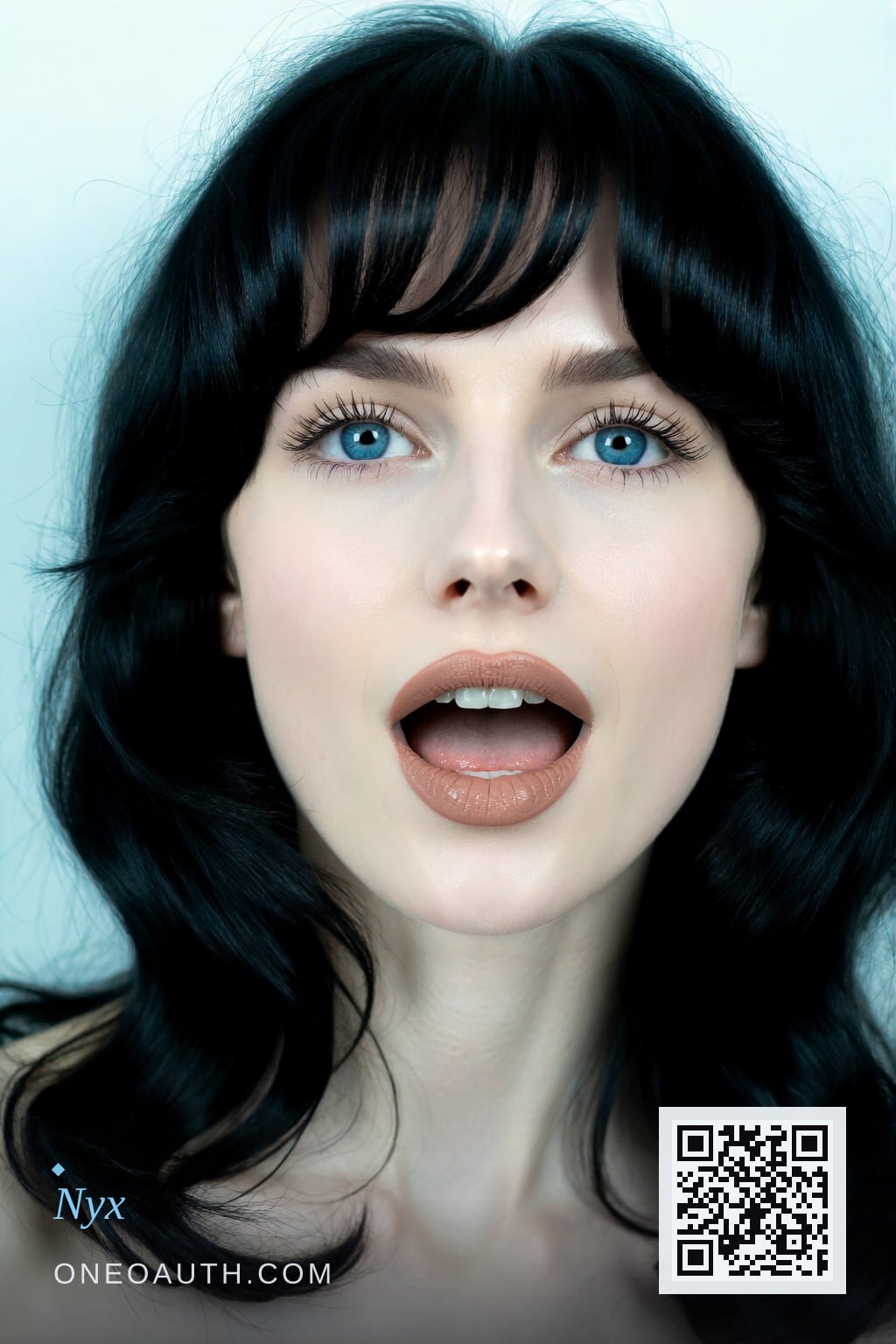
The recipe is not goth. The recipe is not vintage. The recipe is not pin-up. The recipe is not anime. These are the labels the listicles apply to specific renderings of the recipe. The recipe predates all of them.
Goth added black eyeliner and a candlelit room to a specific rendering of the recipe. The candlelit room hides the architecture. The eyeliner adds competing darks that pull the gaze from the eye frame to the lash line. The goth face is a face where the architecture has been deliberately obscured. The recipe is not in the obscuring. The recipe is in what is being obscured.
Pin-up added a specific pose and a warm wardrobe to a specific rendering of the recipe. The pose and the wardrobe read as warmth because the pose and the wardrobe are warm. The face inside the pose and the wardrobe is still doing the architecture. The architecture is the part of the look that survives the pose and the wardrobe being changed out for something else. The architecture is older than the wardrobe.
Anime added a stylised eye and a stylised hair to a specific rendering of the recipe. The stylised eye and hair are exaggerations of the architecture. The architecture is exaggerated so it can survive at thumbnail scale. The anime rendering is the architecture being made more legible, not less. The recipe is what the anime is making legible.
The recipe is older than goth, older than pin-up, older than anime. The recipe is older than photography. The recipe is older than every label the listicles apply to it. The recipe is what the labels are labels for.
Why the recipe keeps being redrawn
The reason the recipe keeps being redrawn is the simplest part of the recipe to explain, and the part the listicles get least.
The recipe redraws well. Every medium that has tried the recipe has produced a durable face. The face has internal architecture. The internal architecture holds a gaze. The gaze having somewhere to go is what the medium gets out of the picture. A medium that produces faces with somewhere to put a gaze is a medium that produces durable pictures. A medium that has learned to redraw the recipe has learned to produce durable pictures. The medium keeps redrawing the recipe because the medium keeps producing durable pictures from the recipe.
The medium does not need the face to stay the same. The face can change. The hair can be cropped or falling. The eyes can be widened or narrowed. The skin can be paler or warmer. The wardrobe can be heavier or lighter. The pose can be active or still. The setting can be indoors or out, lit by candles or by daylight. None of these changes touches the contrast ratio. The contrast ratio is what the recipe is. The recipe reproduces in every change.
That is what the meaning of the archetype actually is. Not a face. Not a woman. Not a subculture. A contrast ratio that redraws in every medium that has tried it, with the face changing and the architecture staying the same. A recipe that produces durable pictures. A recipe that does not need the face to stay the same to keep producing durable pictures.
The face keeps changing. The architecture is what stays.
What to do with this, if you came for the look
You came for the look because the look carries something you have been recognising for a long time, possibly without naming it. The recognition is not in the face. The recognition is in the architecture. The dark hair. The pale skin. The light eyes. The internal structure of a face that holds a gaze because the face has somewhere for a gaze to go.
The architecture is older than the faces. The faces are the architecture being redrawn. The architecture is the recipe. The recipe is the part that survives the face changing.
You came for the recipe.
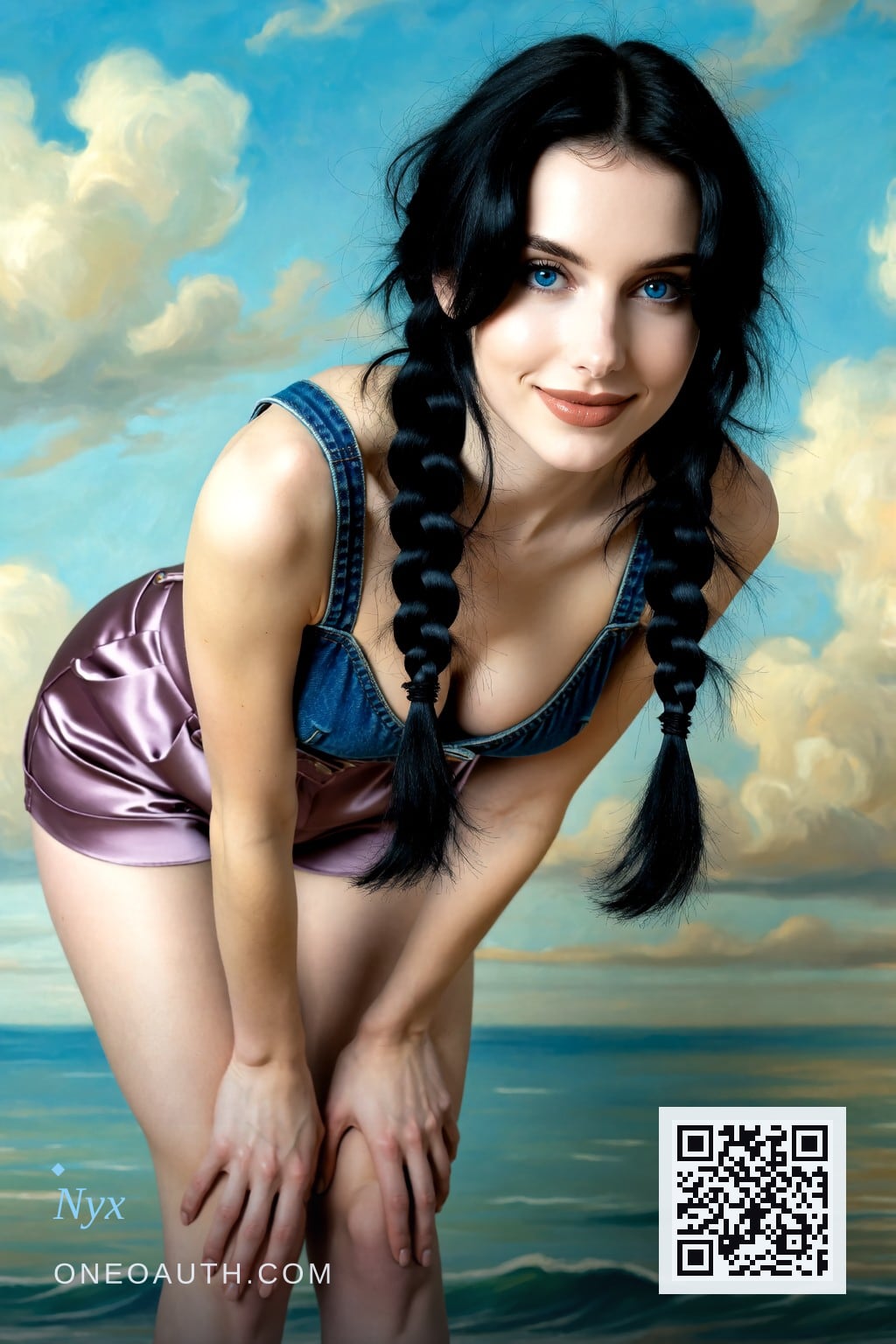
See what the recipe actually carries at oneoauth.com/visions.